The Physics of Super-Speed: Why The Flash Would Actually Be Blind
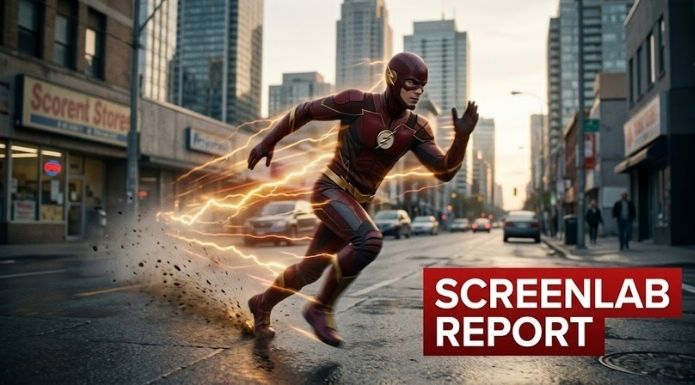
To navigate any environment, a biological entity requires a functional feedback loop: See object → Process data → Execute decision. In the speedster genre, when a specimen travels at faster than light (superluminal) speeds (v > c), this loop is physically severed. This isn’t just “fast” movement; it is the total abandonment of reality in … Read more


The Multiverse Problem: Why Infinite Probability Doesn’t Mean ‘Anything Goes’ in Cinema”

The Multiverse has become the most convenient lie in modern cinema. According to the standard industry snippet, it is a “tool for exploring character, regret, and ‘what-if’ scenarios.” In reality, it has become a Scientific Prop, a junk drawer where directors stash every impossible whim and narrative convenience under the guise of “infinite probability.” ScreenLab rejects the meat-fingered notion that “Infinite” equals “Anything Goes.” Just because there are infinite numbers between 1 and 2 doesn’t mean the number 3 is one of them. Yet, in the modern “Arthouse Blockbuster,” we are told that the laws of biology and physics are merely suggestions that can be ignored for the sake of a gag or a “metaphor.”

The Isolated Cabin Test: Solaris and the Genre Squat Illusion

The ScreenLab defines Genre Squatting as the act of occupying a Science Fiction setting while actively loathing the discipline required to maintain it. Andrei Tarkovsky didn’t just pioneer this; he admitted to it. By his own account, he adapted Solaris because he needed the money and the “respected” cover of author Stanisław Lem to bypass Soviet censors.

The Sci-Fi Prop Fallacy: 2001 and Enemy Mine Narrative Foundations

There is a common, modern delusion that science in fiction is merely a “backdrop”, a set of interesting premises used to explore the “real” human story. This view is not only lazy; it is a fundamental misunderstanding of the genre. If you can take your “sci-fi” story, move it to a 19th-century logging camp, and keep every character beat and structural challenge intact, you aren’t writing science fiction. You are using science to dress up a story that does not hinge on the science.

Why Modern Movies Look Grey: The Green Screen Color Crisis

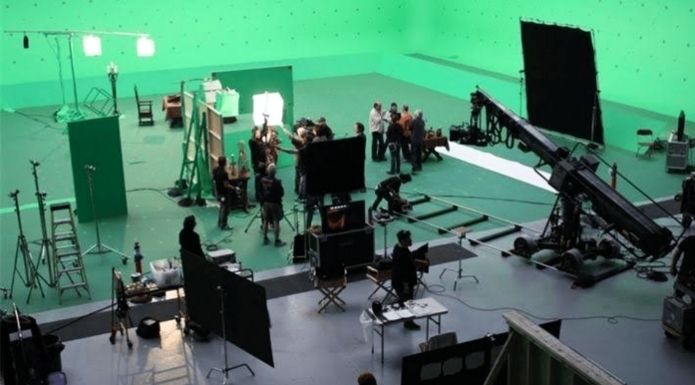
Have you ever sat down to watch a modern blockbuster, armed with a high-end 4K display, only to find yourself squinting through a flat, desaturated “smog”? You aren’t alone. In the last decade, a specific visual rot has infected big-budget cinema, a look characterized by muddy blacks, sickly skin tones, and a persistent “grey twilight” … Read more

The Retrofit Contamination: Narrative Sovereignty vs. Psychological Labels

When you try to force a story into a pre-selected scientific label, you aren’t explaining the movie, you’re hallucinating a bias. In this audit, we examine the ‘Retrofit Fallacy,’ where the internal logic of a masterpiece like The Lord of the Rings is amputated to fit the narrow confines of a social psychology listicle.

The Kinetic Anchor Fallacy: The Biomechanics of Sci-Fi Prosthetics

We’ve all seen the shot: A character with a gleaming titanium arm punches through a concrete wall or lifts the back of a moving semi-truck. It’s the ultimate “cool” factor in sci-fi, popularized by the Six Million Dollar Man and perfected by modern icons like Bucky Barnes. The problem with the “Super-Arm” isn’t the arm itself, it’s the Kinetic Anchor. Hollywood treats a bionic limb like a bolt-on accessory, ignoring the fact that the human body is an integrated kinetic chain. When you add a six-million-dollar arm to a ten-cent shoulder, you aren’t building a superhero. You’re building a biological self-destruct button.

The Aesthetic Evasion: Annihilation and Vague-Core Sci-Fi

The ScreenLab has a low tolerance for Genre Squatting. This is when a creator uses the aesthetic of Science Fiction, the spaceships, the alien ecologies, the “Soldier Scientists”, but refuses to do the actual discipline of the genre. Annihilation (2018) is the ultimate specimen of this fraud. It is a film that mistakes a lack of contrast for atmosphere and “Scientific Delusions” for intellectual depth. If the Spectral Green Screen Mud was a technical failure of green-screen logistics, Annihilation (2018) is a deliberate aesthetic crime. It is a film that mistakes vagueness for depth and desaturation for “atmosphere.” At ScreenLab, I classify this as Vague-Core Sci-Fi, a genre where the creators are so in love with their own perceived intellect that they refuse to respect the basic rules of the genre they’re squatting in.

Why Giant Movie Insects are Physically Impossible

In science fiction, creating a giant insect is often treated as a simple matter of magnification. However, physics does not scale linearly. The Square-Cube Law dictates that as an object grows in size, its volume (and mass) grows much faster than its surface area.

Privacy Overview

This website uses cookies so that we can provide you with the best user experience possible. Cookie information is stored in your browser and performs functions such as recognising you when you return to our website and helping our team to understand which sections of the website you find most interesting and useful.