The Phantom Body: Why Total Body Replacement is Movie Sham

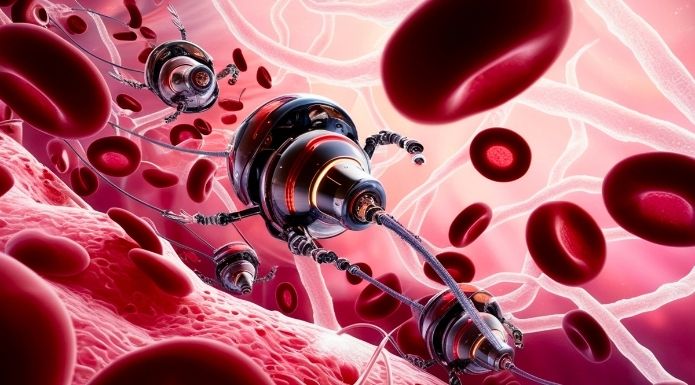
In the 2014 remake of RoboCop, the scientists hand-wave the protagonist’s agitation as a simple case of “Phantom Limb Syndrome.” It’s a classic bit of cinematic science-dropping, using a real medical term to mask a massive logical void. When Murphy first wakes up, they portray the transition as an existential crisis: Murphy is “very upset” about his new form, but he’s functioning with near-perfect dexterity almost immediately.

Instant Credit Card Tracing: An Absurd Procedural Myth

In the world of police procedurals—think NCIS, CSI, Law & Order: SVU, or Criminal Minds—the “Tech Expert” is the ultimate plot-accelerator. The most common tool in their arsenal is the Instant Credit Card Trace. The cops identify a suspect at 14:00, and by 14:05, a glowing dot on a high-tech map shows them exactly which gas station the suspect is currently standing in. There is a common misconception (often reflected in generic search results) that this trope is about tracing fraudulent activity on stolen cards.

The Physics of Super-Speed: Why The Flash Would Actually Be Blind

To navigate any environment, a biological entity requires a functional feedback loop: See object → Process data → Execute decision. In the speedster genre, when a specimen travels at faster than light (superluminal) speeds (v > c), this loop is physically severed. This isn’t just “fast” movement; it is the total abandonment of reality in … Read more

The Multiverse Problem: Why Infinite Probability Doesn’t Mean ‘Anything Goes’ in Cinema”

The Multiverse has become the most convenient lie in modern cinema. According to the standard industry snippet, it is a “tool for exploring character, regret, and ‘what-if’ scenarios.” In reality, it has become a Scientific Prop, a junk drawer where directors stash every impossible whim and narrative convenience under the guise of “infinite probability.” ScreenLab rejects the meat-fingered notion that “Infinite” equals “Anything Goes.” Just because there are infinite numbers between 1 and 2 doesn’t mean the number 3 is one of them. Yet, in the modern “Arthouse Blockbuster,” we are told that the laws of biology and physics are merely suggestions that can be ignored for the sake of a gag or a “metaphor.”

Why Giant Movie Insects are Physically Impossible

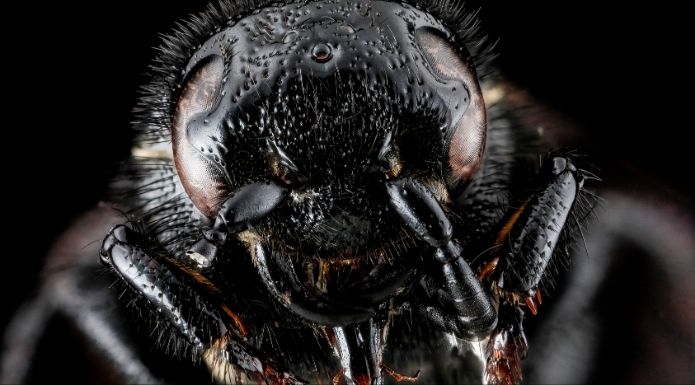
The Scaling Problem: Surface Area vs. Volume In science fiction, creating a giant insect is often treated as a simple matter of magnification. However, physics does not scale linearly. The Square-Cube Law dictates that as an object grows in size, its volume (and mass) grows much faster than its surface area. Biological Ground Truth: Structural … Read more

Privacy Overview

This website uses cookies so that we can provide you with the best user experience possible. Cookie information is stored in your browser and performs functions such as recognising you when you return to our website and helping our team to understand which sections of the website you find most interesting and useful.