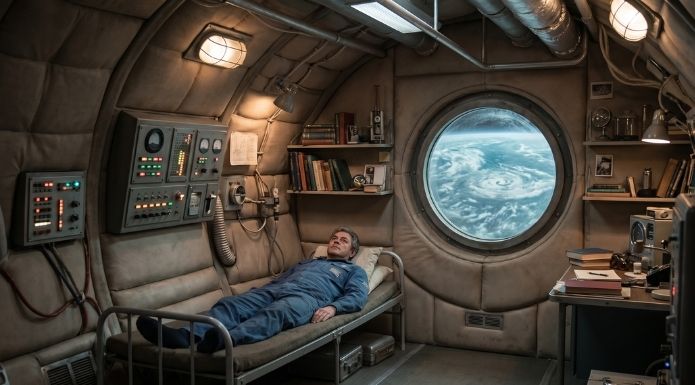
The Isolated Cabin Test: Solaris and the Genre Squat Illusion

The ScreenLab defines Genre Squatting as the act of occupying a Science Fiction setting while actively loathing the discipline required to maintain it. Andrei Tarkovsky didn’t just pioneer this; he admitted to it. By his own account, he adapted Solaris because he needed the money and the “respected” cover of author Stanisław Lem to bypass Soviet censors.

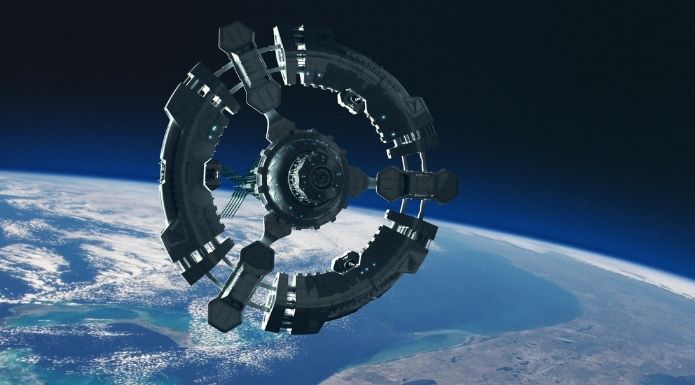
The Sci-Fi Prop Fallacy: 2001 and Enemy Mine Narrative Foundations

There is a common, modern delusion that science in fiction is merely a “backdrop”, a set of interesting premises used to explore the “real” human story. This view is not only lazy; it is a fundamental misunderstanding of the genre. If you can take your “sci-fi” story, move it to a 19th-century logging camp, and keep every character beat and structural challenge intact, you aren’t writing science fiction. You are using science to dress up a story that does not hinge on the science.

The Aesthetic Evasion: Annihilation and Vague-Core Sci-Fi

The ScreenLab has a low tolerance for Genre Squatting. This is when a creator uses the aesthetic of Science Fiction, the spaceships, the alien ecologies, the “Soldier Scientists”, but refuses to do the actual discipline of the genre. Annihilation (2018) is the ultimate specimen of this fraud. It is a film that mistakes a lack of contrast for atmosphere and “Scientific Delusions” for intellectual depth. If the Spectral Green Screen Mud was a technical failure of green-screen logistics, Annihilation (2018) is a deliberate aesthetic crime. It is a film that mistakes vagueness for depth and desaturation for “atmosphere.” At ScreenLab, I classify this as Vague-Core Sci-Fi, a genre where the creators are so in love with their own perceived intellect that they refuse to respect the basic rules of the genre they’re squatting in.

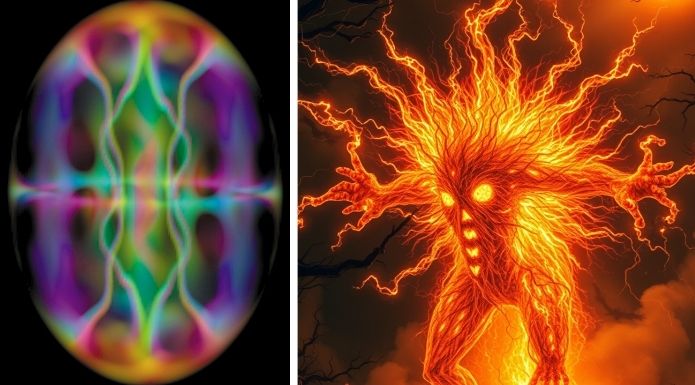
The Sci-Fi Schlock Field Guide: Spectral and the Bose-Einstein Blunder

Spectral isn’t just a movie; it’s a Stefon-approved fever dream of sci-fi tropes. It has everything: DARPA engineers scavenging junkyard printers, CIA analysts making “suppositions,” absolute-zero ghosts, ceramic bathtubs hidey-holes, and reversed polarity flashlights. It serves as a master-class in how to spot schlocky sci-fi films.

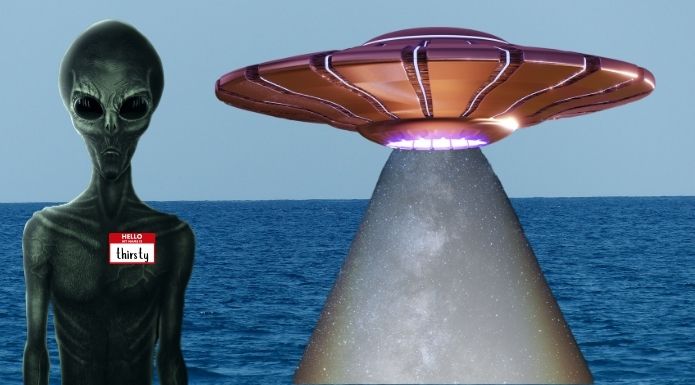
The Hydration Fallacy: Why Invading Earth for Water is a Movie Scam

If you are an alien species that requires water to survive, you didn’t just appear in a vacuum; you evolved on a water-rich planet. To reach the stage of interstellar spaceflight, you must have enjoyed millions of years of biological stability. You didn’t build a warp drive while dying of thirst. By the time you are out in space gallivanting around the neighborhood, you are already an expert at resource management. You’ve mined asteroids, tapped into icy moons, and likely mastered the synthesis of basic molecules.

The Kinetic Heat Paradox: Why Snowpiercer’s Train is a Physics Scam

Snowpiercer is a prime example of a specific trend in modern science fiction: Science as a Prop. The writers clearly started with the metaphor—a rigid, linear class hierarchy where the “haves” are at the front and the “have-nots” are at the back—and worked backward to the physics. The result is a “Perpetual Motion Machine” that violates every law of thermodynamics we hold dear.

Privacy Overview

This website uses cookies so that we can provide you with the best user experience possible. Cookie information is stored in your browser and performs functions such as recognising you when you return to our website and helping our team to understand which sections of the website you find most interesting and useful.