
Have you ever sat down to watch a modern blockbuster, armed with a high-end 4K display, only to find yourself squinting through a flat, desaturated “smog”? You aren’t alone. In the last decade, a specific visual rot has infected big-budget cinema, a look characterized by muddy blacks, sickly skin tones, and a persistent “grey twilight” that seems to coat every action sequence.
ScreenLab, calls this The Muddy Key. It’s the technical “hangover” of the green-screen era, and Spectral (2016) is a prime specimen of what happens when “fixing it in post” becomes a substitute for the laws of physics. It would be unkind of me to pick on one film though, especially one you may have never seen. However, there are plenty of other examples of this “let’s film through a wet wool blanket” visual.
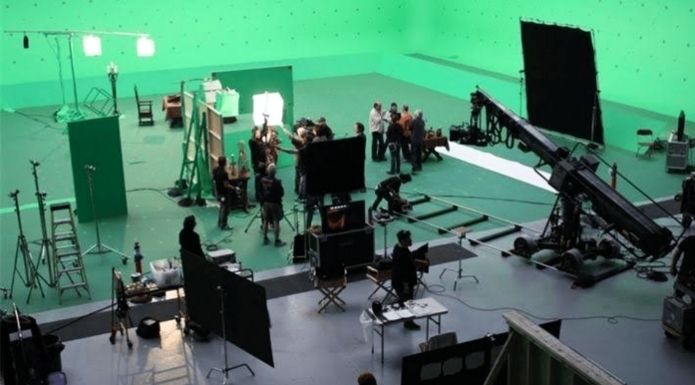
The Pain Point: Why Does it Look Like “Grey Murky Shit”?
When viewers complain about “murky” films, they’re usually reacting to three specific technical failures that ScreenLab has identified in the Industry Film Tech lab:
- Green Spill: To hide the green spill (light bouncing off the stage onto the actor), editors often suck the color out of the frame. This turns vibrant human skin into a dull, “zombie-grey” palette.
- The Lighting Mismatch: The actors are lit with “safe” stage lights, but the digital background is a dark, misty battlefield. Because the lighting geometry doesn’t match, the brain rejects the image as “fake” or “flat.”
- SSS Collapse: Properly lit human skin needs to breathe light. Traditional green-screen lighting destroys Subsurface Scattering (SSS), making $100M actors look like they were modeled out of matte grey plastic.
The Reference Vacuum: Spotting the “Mud” in the Wild
You don’t need a degree in cinematography to see this failure; you just need to look for the “Sticker Effect.” This happens when the actors are physically separated from the physics of their environment.
- The “Zombie” Skin Tones (Justice League, 2017): In the infamous cornfield scenes, the sky is a flat, murky grey-blue, but the actors’ skin looks like desaturated clay. This is the Desaturation Trap in action, the colorist had to suck the life out of the actors to hide the green light reflecting off the stage.
- The “Pasted” Sky (Black Widow, 2021): During the high-altitude escape sequences, the actors look like they’ve been cut out of a magazine and pasted onto a foggy window. Because the Practical & Cinematography team lit them with “safe” studio lights instead of the harsh, directional light of the open sky, the Subsurface Scattering (SSS) on their faces is flat and lifeless.
- The Tripping Soldier (Spectral, 2016): As noted in my chronological audit of Spectral, the Marines often look like they’re tripping over invisible shoestrings. This is the result of a Reference Vacuum. When an actor is surrounded by 360 degrees of flat green fabric, they lose the ability to interact with the environment, resulting in what amounts to clumsy and frenetic “over-animation” of the characters to make it look “real.”
The Log-Gamma & LUT Mismatch: The “Grey Twilight” look often stems from a failure in the Color Pipeline. Modern digital cameras (like the Arri Alexa or RED) capture footage in “Log” format. This is a flat, grey, low-contrast image that preserves maximum data.
— The LUT Trap: On a rushed production like Justice League, editors apply a LUT (Look-Up Table) to “convert” that grey footage into a final look.
— The Muddy Result: If the lighting on the green-screen stage doesn’t perfectly match the intended LUT, the shadows “crush” into a charcoal grey instead of a true black. This is where that annoying grey twilight feeling comes from, the data is there, but the technology cannot overcome the mismatch.
The Anatomy of a Muddy Frame
Why does a $100M production end up looking like a home movie filmed through a wet wool blanket? It isn’t usually a lack of talent; it’s a collision between the laws of physics and the convenience of digital tools.
To understand how the “Grey Twilight” happens, we have to look at the three specific technical fractures that occur the moment an actor steps onto a green-screen stage.
1. The Geometry of the “Green Spill”
In traditional cinematography, the biggest enemy of a clean shot isn’t a missed line, it’s the light physically bouncing off the green stage and onto the actor. In the film industry, this is called Green Spill.
To get a “clean key” (the silhouette the software cuts out), the green screen has to be lit perfectly flat and very bright. If the screen is too close to the talent, it effectively becomes a giant green light bulb.
- The Software “Fix”: Editors use “despill” algorithms to neutralize that green glow.
- The Life Sucking Failure: Because green sits right next to the warm tones of human skin on the color spectrum, sucking out the green often sucks out the life. This is why characters in Spectral or Justice League end up looking like grey, desaturated ghosts.
2. The Subsurface Scattering (SSS) Crisis
Human skin isn’t a flat surface; it’s a translucent biological organ, with millions of microscopic hills and valleys. Light actually penetrates the top layer and bounces around inside before reflecting back out. This is Subsurface Scattering (SSS), and it’s what gives people a healthy “glow.”
- The Lighting Mismatch: On a green-screen stage, actors are often lit with flat, “safe” lighting to avoid shadows that might mess up the digital cutout.
- The Result: Without the high-contrast, directional light of a real environment, the SSS doesn’t trigger correctly. When you composite that “safely lit” actor into a dark, digital battlefield, they stop looking like a living being and start looking like a matte-grey plastic action figure.
Why the Kent Farm Turned Grey
The 2017 cornfield scene in Justice League, specifically the reshot footage, is the gold standard for how this technology can go to shit. It was a perfect storm of logistical errors that resulted in some of the murkiest visuals in modern superhero cinema.
- The Inverse Square Problem: The production attempted to film a massive “outdoor” environment on a cramped indoor stage. To prevent Green Spill, the green screens should ideally be 20 to 30 feet behind the actors. Because they were “boxed in,” the screens were physically too close, meaning the green light was reflecting off the stage and “baking” into every frame of the actors’ skin and hair.
- The Wrap-Around Situation: To simulate a bright, sunlit day, the crew had to blast the green screens with an immense amount of light to get a clean digital cutout. This caused the green light to wrap around the edges of the actors’ silhouettes. Once that light is embedded in fine details like hair or the texture of a suit, it cannot be removed without destructive editing.
- Desaturation Compromise: Because the green spill was so heavy, the colorists were forced into a corner. The only way to hide the green glow on the actors’ faces was to aggressively desaturate those specific color frequencies. Since human skin tones rely on the red and yellow parts of the spectrum, which sit right next to green, the “fix” sucked the life out of the actors, leaving them looking like grey, desaturated clay figures.
The ScreenLab Reality: This wasn’t a “stylistic choice” to make the film look gritty. It was a desperate technical compromise to hide a lighting environment that had spiraled out of control.
The Projection Pioneer: Why ‘Oblivion’ Got it Right First
Before the industry moved to digital LED walls, Joseph Kosinski’s Oblivion (2013) proved that you don’t need a green screen to create a world, you just need a massive amount of muslin and 21 high-powered projectors.
In my audit of the Interstellar Hydration Fallacy, I dismantled the “Tet” AI’s logic for stealing Earth’s water, but from a Practical & Cinematography standpoint, the film is a masterclass in avoiding the “Grey Twilight.”
- The 15K Wrap-Around: To film the Sky Tower, the production surrounded the set with a 500-footMuslin screen and projected real footage of Hawaiian clouds.
- The Reflection Win: Because the clouds were physically projected, the light reflecting off the glass furniture and Tom Cruise’s flight suit was 100% real.
- Preserved Color Science: There was no green spill to “fix.” The actors’ skin retained its natural warmth and Subsurface Scattering because they were being lit by the actual color of the sky, not a digital guess.
The ScreenLab Reality: Oblivion serves as the “spiritual ancestor” to the modern industry fix: LED Volume. It proved that if you put the actor inside the light of their environment, the physics of the shot will take care of itself.
The Industry Fix: LED Volumes and Virtual Production
Now, we are finally seeing an end to the “Grey Twilight” era thanks to a technology known as Virtual Production, specifically the use of LED Volumes (popularized by The Mandalorian and The Batman).
Instead of a green wall, the actors stand inside a massive, wraparound LED screen that displays the actual digital environment in real-time.
- Physical Light Geometry: The “Grey Twilight” is actually in the room. If the digital world is a foggy battlefield, the LED panels hit the actor’s skin with that exact grey-blue light.
- Preserving the SSS: Because the light is the correct color from the start, there is no “Green Spill” to hide. The Subsurface Scattering (SSS) remains intact, ensuring the actors look like living beings rather than desaturated plastic.
- The Reference Point: As I noted in my audit of Spectral, actors often look lost on a green screen stage. In a Volume, they can actually see the world they’re in, which eliminates the “Reference Vacuum” and makes the performance feel grounded.