
To navigate any environment, a biological entity requires a functional feedback loop: See object → Process data → Execute decision. In the speedster genre, when a specimen travels at faster than light (superluminal) speeds (v > c), this loop is physically severed. This isn’t just “fast” movement; it is the total abandonment of reality in favor of narrative convenience.
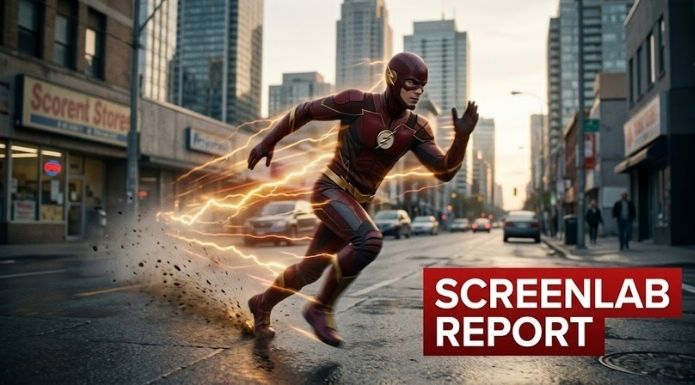
Exhibit 1: Speedster Abyss (The Information Horizon)
For a human eye to function, photons must reflect off an object and strike the retina. If a specimen is traveling at 2,000c, they’re outrunning the very “news” of the universe’s existence.
- The Sensory Blackout: Barry Allen isn’t “guessing” his way through a city; he is stepping into a literal abyss. Because he arrives before the light from his destination can reach his eyes, he is navigating a world that, from his perspective, has not yet been rendered.
- The Edge of the World: If the world had an edge, he would be stepping off it before he could even begin to make a decision. He is a kinetic missile fired into a dark room, praying the furniture hasn’t been moved since the last time he stood still.
Being functionally blind isn’t the only fascinating thought about the consequences of “running” faster than light. We also have a relativistic paradox concerning the speedster’s feet!
Exhibit 2: The Doppler Shift Lethality
Even at sub-light speeds (e.g., 0.90c), the world wouldn’t look like a “cool blur.” It would look like a death trap.
- Blue-Shifted Radiation: Light from objects the speedster approaches would be compressed into the ultraviolet and X-ray spectrum. A sunny afternoon becomes a lethal radiation storm for the runner’s retinas.
- The Infrared Void: Everything behind the runner red-shifts into invisible radio waves, leaving them in a wake of absolute darkness.
Exhibit 3: The “Incredibles” Gold Standard
We must look to Dash Parr of The Incredibles as the better speedster depiction. Dash’s speed tops off at around 600 miles per hour. Because his speed remains Newtonian, he is still bound by the laws of optics. He has to react to what he sees because the light is still faster than he is. There is a weight and a purpose to his movement that the “Modern Speedster” has abandoned. How do I know how fast Dash could run?
The “Water Run” Benchmark: To run on water without falling in, a human of Dash’s mass would need to maintain a forward velocity of at least 195–250 mph. However, Dash doesn’t just skim the surface; he maneuvers and accelerates on it as if it were concrete, which suggests he’s operating much closer to the 400+ mph mark.
The “Thumbtack” Incident: This is the ultimate specimen for audit. Dash runs to the front of the classroom, places a tack, and returns to his seat in approximately 1/24th of a second (one frame of film). Depending on the size of the room, physicists estimate he would need to be moving between 475 mph and 650 mph.
The Sound Barrier (The Line in the Sand): Crucially, Dash stays under 767 mph (Mach 1). We know this because he never produces a sonic boom, which would have shattered every window in that classroom. This keeps him firmly in the “Newtonian” realm, he is extremely fast, but he still exists within a world where light is faster.
The Cinematic Payload: Why Dash Feels “Faster”
Despite being “slower” than his comic-book counterparts, Dash’s jungle sprint feels more intense because the camera respects his momentum.
- The Decision Gap: Because Dash is sub-sonic, he is still receiving visual data in real-time. We see him actively dodging branches and skimming the water. When he runs off a cliff, he doesn’t just “Speed Force” his way to safety; he has to maintain his gait to stay on top of the surface tension.
- The Physicality of Error: Dash actually runs into things. He has to compensate for his own inertia. In contrast, overpowered speedsters often exist in a “Time-Stop” state where they casually move objects around while the rest of the world is frozen.
- The Triumphic Conclusion: By slowing the character down to 400-600 mph, the filmmakers allow the audience to experience the struggle of speed. The Flash isn’t running; he’s just a “Teleporter who moves his legs for fun.” Dash is a runner, and every frame of the jungle chase proves it.
Addressing the “Speed Force” Handwaving
Writers often cite a “Speed Force Sense” to handwave this navigation problem. However, if we accept this waiver, we lose the physics-based stakes. It turns a “Speedster” into a Teleporter who moves his legs for fun.
This “Teleportation” issue is most egregious in the common “Time-Stop” scenario. When we see a character like Quicksilver casually strolling through a room of frozen people, we aren’t watching a man moving fast; we are watching a film that has fundamentally broken its own rules of momentum.
Exhibit 2.1: The Kinetic Lie of Manipulation
In these sequences, the hero often stands perfectly still to manipulate objects—repositioning a guard’s hat or flicking a bullet. From a narrative perspective, the logic fully collapses here:
- Momentum Deletion: For a speedster to move a bullet while their own body is stationary, their arm must accelerate to impossible velocities and then decelerate to zero instantly. If they aren’t maintaining a constant forward gait, they aren’t “running” anymore, they have simply exited the flow of time.
- The Ghost in the Room: By treating speed as a “pause button” for the universe, filmmakers turn the character into a ghost rather than a runner. There is no conservation of momentum, no friction, and no physical consequence to their actions.
- The Contrast: This is why Dash’s jungle run is superior. He never “stops time.” He is a physical object moving through a physical world, and the narrative reality of the scene is maintained because his momentum has consequences.