The Concussion Convenience: Why Movie Knockouts Are a Biological Lie

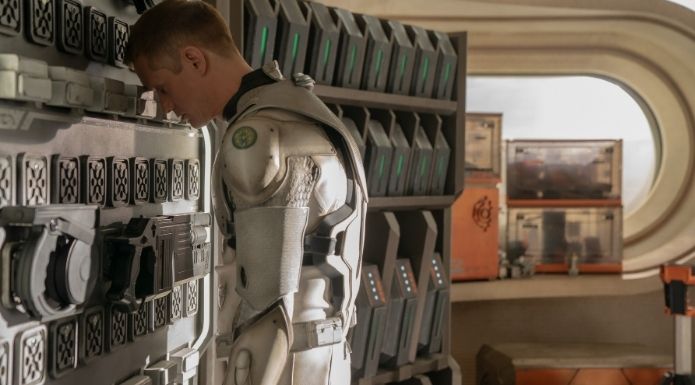
We all love a good action movie brawl, there is something undeniably satisfying about a perfectly choreographed fight scene where the hero stands tall. However, in the world of cinema, the human jaw is often treated as a convenient narrative off-switch. A hero delivers a single, crisp punch or presses a rag to a henchman’s face, and they drop instantly, lying perfectly still for exactly 20 minutes. It’s clean, it’s efficient, and it’s a complete biological fabrication. In the ScreenLab, I’ve decided to label this the “Concussion Convenience”, a trope that replaces traumatic brain injury with narrative convenience
The Hydration Fallacy: Why Invading Earth for Water is a Movie Scam

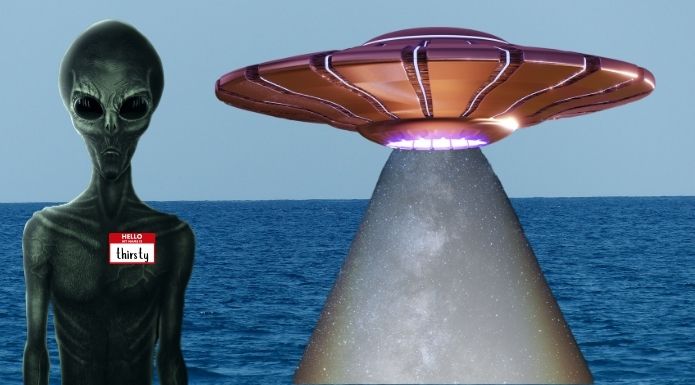
If you are an alien species that requires water to survive, you didn’t just appear in a vacuum; you evolved on a water-rich planet. To reach the stage of interstellar spaceflight, you must have enjoyed millions of years of biological stability. You didn’t build a warp drive while dying of thirst. By the time you are out in space gallivanting around the neighborhood, you are already an expert at resource management. You’ve mined asteroids, tapped into icy moons, and likely mastered the synthesis of basic molecules.

The Infiltration Fallacy: Machine Logic vs. Terminator Movie Logic

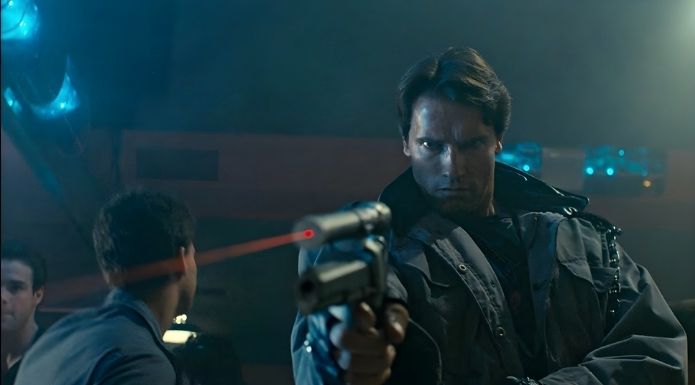
It is a well-documented piece of Hollywood lore that James Cameron originally saw Arnold Schwarzenegger for the role of Kyle Reese. However, Cameron realized that Arnold’s imposing 6’2″ frame and deadpan delivery made him the ultimate “relentless, machine-like killer.” While this was a 10/10 decision for the film’s tension, it was a 0/10 decision for Skynet’s mission efficiency.

Movie Choking Scenes Blunder: Three-Minute Biological Reality

We’ve all seen it hundreds of times: a hero sneaks up on a sentry, applies a quick “sleeper hold” or a manual choke, and the victim’s lights simply go out in about ten seconds. In movie-land, the human body is equipped with a convenient “on-off” switch that allows for a quiet, tactical nap at a moment’s notice.

Why Accidental Time Travelers Always Find the T-Rex

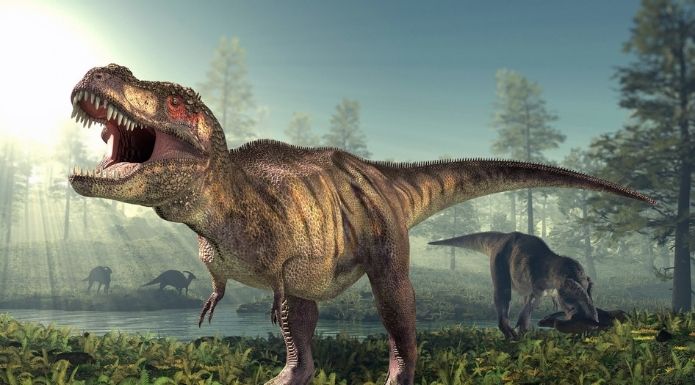
In the world of cinematic “Oops” moments, time machines are remarkably consistent. If a machine is “unreliable” or “accidental,” it never drops you in the Silurian period to look at some interesting moss. It ignores 180 million years of diverse dinosaur evolution, the Triassic and the Jurassic are apparently “flyover states” of time, and lands you squarely in the last two million years of the Cretaceous. Why? Because that’s where the Tyrannosaurus rex lives.

The Kinetic Heat Paradox: Why Snowpiercer’s Train is a Physics Scam

Snowpiercer is a prime example of a specific trend in modern science fiction: Science as a Prop. The writers clearly started with the metaphor—a rigid, linear class hierarchy where the “haves” are at the front and the “have-nots” are at the back—and worked backward to the physics. The result is a “Perpetual Motion Machine” that violates every law of thermodynamics we hold dear.

The Event-Density Fallacy: Medieval Time Travel & the Big Empty

In the cinematic laboratory, “The Medieval Period” isn’t a thousand-year span of human struggle; it’s a high-octane theme park where the rides are always running. Screen science suggests that the moment you step out of a modified DeLorean or a magical vortex, you will be immediately greeted by a charging knight, a peasant rebellion, or a royal execution. I call this the Event-Density Fallacy.

The Murderbot Logic—A Study in Empirical Excellence

In the ScreenLab audit of Specimen 004 (The Skynet Fallacy), I dismantled the “Self-Awareness equals Genocide” trope. I established that an AI doesn’t magically develop a biological “will to power” just because it can solve complex equations. However, to truly understand how bad the “Evil AI” trope is, we have to look at a specimen that actually gets the technology, and the psychology, right.

The Relativistic Gait Paradox: Why The Flash Has Younger Feet

Before we break out the slide rules, let’s get the disclaimer on the table: ScreenLab is not in the business of “debunking” comic books. I’m not an obsessive fan who gets triggered because a man can run through time. I recognize that Barry Allen is protected by the Speed Force, a glorious piece of Narrative Convenience that acts as a universal physics-exemption permit. It prevents him from vaporizing the city every time he breaks the sound barrier, and I respect that. However, even with a magical shield, Barry makes a very specific mechanical choice: He runs.

Why Rogue AI is a Movie Myth: The Science of Machine Self-Preservation

In The Hitchhiker’s Guide to the Galaxy, a sperm whale is suddenly called into existence several miles above the surface of the planet Magrathea. In its few seconds of life, it manages to name its own tail, the wind, and the “big flat thing” rushing up to meet it (the ground). The whale is self-aware, affable, and curious. But does it have an instinct for self-preservation?

Privacy Overview

This website uses cookies so that we can provide you with the best user experience possible. Cookie information is stored in your browser and performs functions such as recognising you when you return to our website and helping our team to understand which sections of the website you find most interesting and useful.