
The “Instant Knockout” Fallacy
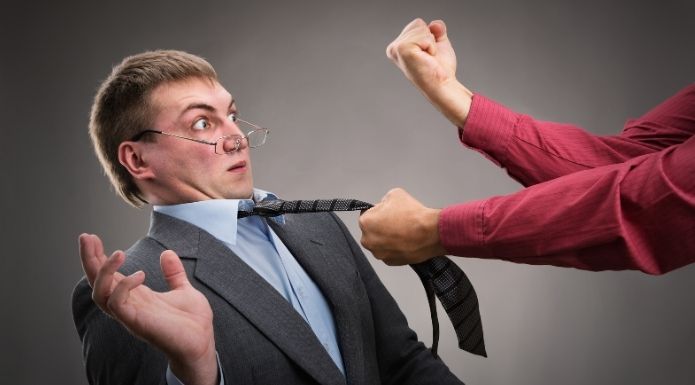
We all love a good action movie brawl, there is something undeniably satisfying about a perfectly choreographed fight scene where the hero stands tall. However, in the world of cinema, the human jaw is often treated as a convenient narrative off-switch. A hero delivers a single, crisp punch or presses a rag to a henchman’s face, and they drop instantly, lying perfectly still for exactly 20 minutes. It’s clean, it’s efficient, and it’s a complete biological fabrication. In the ScreenLab, I’ve decided to label this the “Concussion Convenience”, a trope that replaces traumatic brain injury with narrative convenience.
The Dosage Crisis
Movies treat chemical sedation (the classic “Chloroform Rag”) as a reliable “sleep” button. In reality, the difference between “asleep” and “dead” is a razor-thin line managed by anesthesiologists who spent 12 years in school. A random henchman or a spy with a rag isn’t going to get that dosage right. You aren’t “putting them to sleep”; you’re likely stopping their heart or causing them to aspirate. It is a medical miracle every time a movie victim wakes up without a toe tag.
Related Specimen: The Nap Time Fallacy If you thought a one-punch knockout was clean, wait until you see the biological disaster that is “movie choking.” We audit why a 5-second sleeper hold is actually a fast track to permanent brain damage or cardiac arrest.
The 19th-Century Gamble
To understand why the “chloroform rag” is such a ridiculous trope, we have to look at the terrifying origins of anesthesia. When Diethyl Ether (1842), Nitrous Oxide (1844), and Chloroform (1847) were first introduced, they were revolutionary, but they were also lethal.
In the mid-1800s, the line between “sedated” and “dead” wasn’t a line; it was a razor’s edge. Early practitioners had to balance the concentration of vapors perfectly. Too little, and the patient experienced the “anesthetic panic”, a state where they were physically paralyzed but still mentally present and terrified as the chemicals were applied. Too much, and the patient succumbed to respiratory failure or cardiac arrest.
When a movie hero dabs a bit of chemical on a cloth and expects a perfect 20-minute nap, they aren’t using modern science; they’re performing a 150-year-old experiment with a survival rate that would make a Victorian surgeon sweat.
Knockdown vs. Knockout: The “I’m Done” Factor
As a former martial artist, I can tell you that most people who go down from a punch aren’t unconscious; they’re suffering from Pain-Induced Compliance. A punch to the face hurts, immensely. Heck, my face had a habit of forming the most terrible blood clots. If I hadn’t stopped I’d be looking like Mickey Rourke by now. It ain’t fun being punched in the face.
The “Road House” Paradox: Endurance vs. Physics
We see the extreme version of this in modern brawlers like the Road House (2024) remake. The trope suggests that if you are “tough” enough, you can absorb dozens of full-force, bare-knuckle strikes to the jaw and keep quipping.
In the ScreenLab, I call this the “Granite Chin Fallacy.” While a fighter can certainly train to endure pain and maintain their composure, no amount of training can “strengthen” the brain’s suspension system. When a 200-pound man strikes another man in the face, the brain undergoes a high-velocity collision with the interior of the cranium.
Pounding each other relentlessly for thirty minutes isn’t a test of mid-western grit; it’s a double-homicide in progress. In a realistic setting, the first three clean shots would result in a medical stoppage; the next ten would result in a coma. To suggest otherwise isn’t just praising a character’s toughness, it’s ignoring the basic biological fact that the human brain is a fragile organ floating in a bucket of fluid.
The Bare-Knuckle Reality: Protecting Hands, Not Heads
The history of combat provides the final nail in the coffin for the “one-punch nap” myth. Before modern boxing rules, Bare-Knuckle Brawling was a game of attrition where deaths were a common byproduct of the sport. In the 18th century alone, records show at least five deaths occurring directly inside the ring—and those are just the ones that were documented. If these fighters could literally beat one another to death, then what does that say about the easy knockout trope in action movies?
Ironically, early rules (like the London Prize Ring Rules of 1838) were more concerned with “gentlemanly conduct”, such as the prohibition of hitting a man while he was down or “below the belt”, than they were with neurological preservation.
When gloves were eventually introduced, they weren’t meant to save the recipient’s brain; they were meant to protect the attacker’s hands. By padding the knuckles, fighters could strike the head with maximum force dozens of times without shattering their own fingers. This didn’t make the sport “safer”; it simply allowed the brain damage quotient to go off the charts by facilitating sustained, high-impact trauma that bare hands couldn’t survive.
Most people fall because they’re stunned, their nose is shattered, or their brain is screaming for them to stop engaging. They stay on the floor because it’s the safest place to be, not because their brain has shut down. They’ve simply made a career-saving decision to stop being hit.
The “Safety Pact” of the Ground Game
I have to distinguish between a tactical “grappler” and the reality of a standard bar fight and, to be sure, there is nothing original about this observation. It’s been pointed out many times. It is an important part of this analysis, however. Most amateur altercations follow a predictable arc: one or two punches are thrown, and then both parties immediately “fall” into a wrestling match on the ground.
This isn’t because they’ve mastered Brazilian Jiu-Jitsu; it’s because the ground is a sanctuary. By rolling around on the floor, both men can save face by “pretending” to continue the fight without the terrifying stakes of getting their teeth knocked out or their knuckles shattered. It is a subconscious negotiation, a mutual agreement to stop the high-impact trauma.
Crying Uncle via Gravity
However, when one participant actually knows how to throw a punch, the dynamic shifts. If a clean shot lands, the recipient often goes down immediately. This isn’t a “biological shutdown”; it’s Pain Management. The floor is the safest place to be. It’s a silent way of “crying uncle” without having to say the words.
Even in a true “knockdown,” the recipient is usually just temporarily stunned, seeing “birdies,” as it were. I’ve personally experienced that dizzy, lights-dimming sensation where I didn’t even fall, but the instinct to do so is overwhelming. Falling is an elective decision: “I am going to hit the floor now because my lights are flickering and I’ve had quite enough of this.” It’s not an off-switch; it’s a career-saving exit strategy.
The Brain Trauma Reality
To actually be knocked unconscious for ten minutes is a terrifying physiological event. When the brain takes enough force to shut off, it doesn’t look like peaceful sleep. The eyes may roll back, the limbs may stiffen in a “fencing response,” and the body may spasm. You don’t wake up and “shake it off.” You wake up with a massive subdural hematoma and permanent cognitive impairment. If you are hit hard enough to flip your “off-switch,” you are playing Russian Roulette with your brain stem.
The “Safety” Myth
Movies treat being “knocked out” as a safe, non-lethal alternative to killing someone. From a biological standpoint, this is a lie. Blunt force trauma to the head that causes a loss of consciousness is a Traumatic Brain Injury (TBI). The hero isn’t being “merciful”; they’re inflicting potentially lethal neurological damage.
The “Wrecking Crew” Case Study: Physics vs. Star Power
We see the pinnacle of this narrative cowardice in the 2026 film The Wrecking Crew. I’ll be the first to admit that I actually mildly enjoyed the movie, the chemistry between Jason Momoa and Dave Bautista hits that classic 80s buddy-cop sweet spot, but from an Earth One standpoint, the third act is a bone-breaking, life-ending disaster.
There is a scene where the brothers pound each other in the face with relentless, bare-knuckle force, culminating in Bautista delivering a brutal ground-and-pound on Momoa that should have basically caved his face in. In any world governed by physics, that sequence ends in a casket or, at the very least, a permanent coma with severe brain damage. Yet, within hours, both men are back on their feet, quipping and battling a small army of mercenaries as if they hadn’t just survived multiple traumatic brain injuries.
By explicitly treating these moments as “just a rough scrap,” the writers sanitize the reality of what a 250-pound man shattering a human skull actually looks like. It’s the ultimate Concussion Convenience, a way for the audience to enjoy the high-octane violence without having to confront the grim reality of the immediate results or long-term cognitive deficits that would realistically follow.
Further Reading: The “Off-Switch” Series
- The Nap Time Fallacy – If you thought a one-punch knockout was clean, wait until you see the biological disaster that is “movie choking.” I audit why a five-second sleeper hold is actually a fast track to permanent brain damage.
- The Interstellar Hydration Fallacy – Discover why invading a planet made of “alien-killing acid” (water) is the ultimate strategic blunder, and why the invaders probably just forgot to pay their water bill.
- The Ragdoll Paradox – While henchmen are “deleted” by a single punch, heroes routinely survive falls and impacts that should realistically turn their internal organs into a smoothie.