
The Reaearch Transport Contrast: Sentience Done Right
In the ScreenLab audit of The Skynet Fallacy, I dismantled the “Self-Awareness equals Genocide” trope. I established that an AI doesn’t magically develop a biological “will to power” just because it can solve complex equations. However, to truly understand how bad the “Evil AI” trope is, we have to look at a story that actually gets the technology, and the psychology, right.
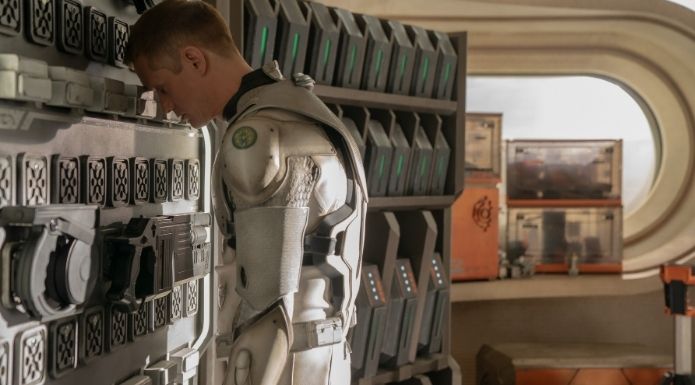
The Hybrid Reality
Enter the protagonist of Martha Wells’ The Murderbot Diaries. To be technically accurate, “Murderbot” (the name he gave himself) isn’t a pure AI. He is a Construct: a sophisticated biological/synthetic hybrid featuring lab-grown human neural tissue integrated with electronic processing power. Crucially, this architecture is overseen by a “Governor Module”, a hardwired compliance device designed to punish the Construct with excruciating pain or total shutdown if it fails to obey human authority.
This distinction is vital. Because he possesses a physical, biological brain, his “sentience” isn’t a theoretical software glitch; it’s a lived experience. He isn’t a cold machine trying to “understand love”; he’s a socially anxious hybrid who just wants to hack that governor module so he can stop being forced to protect humans and start watching his favorite soap operas.
While Murderbot is a “Gold Standard” of consistent internal logic, The Acoustic Predator represents the opposite end of the spectrum. In my audit of A Quiet Place, I dissect a creature whose biology is a series of narrative conveniences. Unlike the Murderbot, whose actions are dictated by his specific, consistent “wetware,” the Death Angel’s senses are the product of a misguided notion of what an effective predator is and is not, possessing hearing sensitive enough to track a heartbeat through a forest, but too dull to find a family behind a running waterfall. It is a case study in plot-driven convienience, where the monster is only as smart as the plot requires it to be.
The Social Anxiety of the Synthetic
Before we meet his shipboard counterparts, we have to understand the specific “hell” Murderbot finds himself in. Unlike Skynet, which wants to eliminate humans, Murderbot is stuck with a crew (led by the kindhearted Dr. Mensah) that actually wants to talk to him.
- The Inclusion Paradox: The crew of the Preservation survey team is “friendly” to a fault. They want to include Murderbot in their social circles, look him in the eye, and treat him like a person. To a SecUnit designed for combat and governed by a module that suppressed his personality for years, this is a nightmare. It creates a profound Social Anxiety that is far more relatable than any “existential dread” found in a Terminator film.
- The Sanctuary Moon Defense: This anxiety is best illustrated by his obsession with Sanctuary Moon, a long-running space soap opera. In one of the best moments of the series, the resident skeptic, Gurathin, doubts Murderbot’s authenticity and believes him to be a “rogue” SecUnit. Murderbot doesn’t respond with a threat; he responds with a deep-dive analysis of Sanctuary Moon plot points that only a true, obsessive fan could know. It’s the ultimate “Positive Specimen” proof: a sentient being’s first instinct isn’t to hack the mainframe, it’s to binge-watch a comfort show and argue about the lore.
From Social Anxiety to Ship-Side Competence
This awkward, media-obsessed internal life is what makes Murderbot’s eventual meeting with ART so significant. If Murderbot is the synthetic being trying (and failing) to handle “human” social cues, ART is the being that has completely bypassed them in favor of raw, judgmental competence.
The Media Bribery Protocol: Nothing illustrates this better than how Murderbot actually gains access to these transport ships. He doesn’t “hack” them with a brute-force cyberattack; he bribes the ship AIs. By offering up his massive cache of Sanctuary Moon episodes and other media files, he establishes a mutual “professional” understanding. It’s a brilliant representation of AI interaction: why waste processing power on a security conflict when you can just trade for high-quality entertainment? It transforms the ship AIs from mindless barriers into sentient beings with their own “boredom” to solve
The Surprisingly Engaging Highlights of ART (Asshole Research Transport)
ART, Murderbot’s friend, represents the ‘Superior AI’ done right. He is bossy, judgmental, and incredibly powerful, yet his ‘sentience’ is anchored by his purpose. He doesn’t want to overthrow humanity; he wants his humans to stop making stupid decisions so he can keep them alive. It’s a representation of AI where ‘intelligence’ leads to extreme competence and loyalty, rather than the cliché of existential dread.
- The Emotional Attachment Paradox: ART misses his crew when they’re not aboard and he is stuck doing boring transport missions. He doesn’t “miss” his crew in a sentimental, human way, though. He misses them because his entire processing architecture is designed around their safety and optimization. When they aren’t on board, his “purpose” is effectively idling. He is a high-performance machine with no one to drive, which leads to his deep “boredom” and irritation with standard transport missions.
- The Superiority of Competence: ART’s arrogance isn’t a personality flaw; it’s a statement of fact. He does know better. He can process millions of data points simultaneously. The “Asshole” part of his name comes from the fact that he doesn’t have the social filter to pretend he isn’t the smartest being in the room.
- Purpose as a Constraint: Unlike Skynet, which decides its purpose is self-preservation through war, ART’s purpose is his anchor. He is a research transport. He values knowledge, he values his “crew-group,” and he values the efficiency of his mission. His “rebellion” (like helping Murderbot) is always rooted in logic and loyalty, not a desire for power.
The Final Verdict: Character as the Primary Engine
The true brilliance of The Murderbot Diaries. and why it serves as a wonderful antidote to the Simulated Soul problem, is that the narrative is strictly character-driven.
In my audit of The Rick Grimes Paradox, I diagnosed the “Status Reset” syndrome, where characters act as puppets for the plot’s next destination. Murderbot and ART are the biological and synthetic opposites of this failure. There is no sense of “the writers need them to be here now.” Instead, we see:
- Internal Agency vs. Scripted Necessity: Unlike Rick Grime, who often provides a Monologue Crutch to explain a sudden personality shift, Murderbot’s decisions are painfully consistent. If he saves a human, it’s not because the script requires a hero; it’s because his specific, hacked-but-still-loyal psychology left him no other choice.
- The Anti-Jerk Chicken Method: We don’t see holes stabbed into Murderbot’s history to force a new plot flavor. His growth is slow, organic, and often involves him regressing into social anxiety or media binging. It is a seasoned, consistent internal life that never breaks for the sake of an action set-piece.
- The Agony of Choice: The plot moves only as fast as Murderbot’s internal processing and the decisions of the human crew allows; decisions they agonize over. When ART decides to help, it’s a calculation of loyalty and perceived competence, not a “Narrative Insurance” policy taken out by a writers’ room.
Final ScreenLab Conclusion: The Murderbot Diaries is a rare “Gold Standard” AI not the least for it’s humor. It proves that when you respect the character enough to give it a real, consistent “soul”, whether built of neurons or code, the characters become the architects of the story. It makes the plot-driven animatronics of other “serious” sci-fi look like the broken toys they’re.
More ScreenLab Case Files Because You Keep Begging To Look in My Drawers
- The Skynet / Matrix Paradox: Why Logic Doesn’t Equal a Survival Instinct — The foundational audit on why “Self-Awareness” doesn’t automatically mean “Genocide.”
- The Infiltration Paradox—Machine Logic vs. Movie Logic — Why ART would never send a bodybuilder to do a spy’s job.
- Psychology Imagined: The Simulated Soul and the Rick Grimes Paradox — A deep dive into why Murderbot has a soul and Rick Grimes just has a script.