
The Core Critique
We’ve all seen it hundreds of times: a hero sneaks up on a sentry, applies a quick “sleeper hold” or a manual choke, and the victim’s lights simply go out in about ten seconds. In movie-land, the human body is equipped with a convenient “on-off” switch that allows for a quiet, tactical nap at a moment’s notice.
The Nap Time trope of movie choking scenes is a critical logic failure—a fundamental disregard for the Three-Minute Rule. This trope ignores the two most stubborn obstacles in human biology: the brain’s oxygen buffer and the body’s natural survival reflex. Neither of these systems can be bypassed in the few seconds it takes to tie a shoelace. When a story uses the “instant choke,” it isn’t just taking a shortcut; it’s abandoning biology for narrative convenience.
The “Rare Exception”: Inglourious Basterds
While 99% of cinema treats the human neck like a light switch, Inglourious Basterds (2009) serves as a rare, brutal correction. In a scene that Tarantino famously insisted be filmed with a level of realism that bordered on dangerous, the victim doesn’t just “fall asleep.”
- The Struggle: There is a prolonged, violent panic. The body’s reflexive survival instincts are on full display, contradicting the “silent” trope.
- The Time Scale: The scene forces the audience to sit through the actual duration required for such an act, moving past the 10-second mark into the territory where biological systems actually begin to fail.
The Concussion Convenience: If you thought a five-second sleeper hold was a “clean” way to clear a room, wait until you see the ridiculous trope of the one-punch knockout. We audit the “sleepy rag” myth, the history of bare-knuckle brawling, and why a movie “nap” is actually a traumatic brain injury.
The Three-Minute Rule
Contrast this with the standard “Nap Time” choking scene. To actually kill a human via strangulation, you are looking at roughly three minutes of sustained, uninterrupted pressure.
- The 10-Second Mark: Unconsciousness (maybe).
- The 1-Minute Mark: Brain damage begins.
- The 3-Minute Mark: Systemic failure.
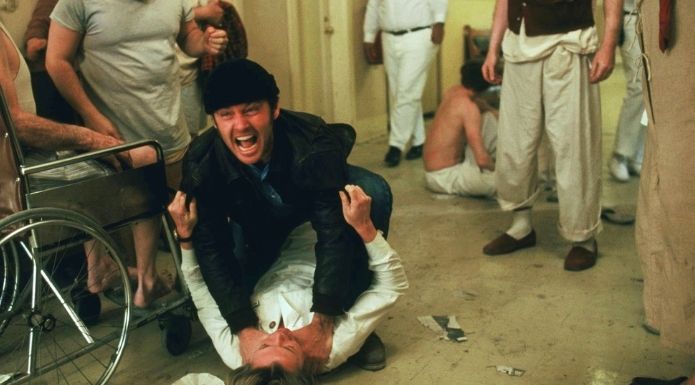
One Flew Over the Cuckoo’s Nest: Another instance where the narrative flirted with the reality of a prolonged struggle, highlighting that ending a life is a traumatic biological event, not a tactical “pause.”
The Physical Reality (Without the Gore)
While we have established the Three-Minute Rule, the physical mechanics of the act are equally at odds with cinema. In a movie, a hero holds a grip with effortless poise. In reality, maintaining the necessary pressure for even a minute is a grueling physical feat. It requires an immense, consistent grip that is incredibly difficult to maintain as the muscles tire and the victim’s weight shifts.
Furthermore, the “silent” part of the fallacy is perhaps the most egregious. A human being doesn’t simply accept a shutdown; there is a violent, instinctive struggle involving kicking, clawing, and a desperate thrashing as the nervous system enters a state of total panic. It is loud, messy, and exhausting—the exact opposite of the “tactical whisper” we see on screen.
The Audience-Centric Verdict
To be clear: this audit isn’t a request for more graphic or gruesome realism. Most audiences have no desire to see the minute-by-minute trauma of a realistic struggle, and for those who do, their motivations fall outside the scope of this lab.
Our complaint is simpler: the Instant Off-Switch is so obviously fake that it shatters the suspension of disbelief. If a filmmaker wants to maintain the stakes of their story, they must at least acknowledge the passage of time. Don’t make it a ten-second nap; make the audience feel the weight of the clock so they aren’t taken out of the story by a biological miracle.
Further Reading
- The Concussion Convenience – Why the human jaw isn’t an off-switch and why “Pain-Induced Compliance” is the only reason movie henchmen stay on the floor.
- The Interstellar Hydration Fallacy – An audit of the ultimate strategic blunder: invading a planet covered in the one substance that liquefies your species.
- The Ragdoll Paradox – A deep dive into why movie heroes survive falls that should realistically turn their internal organs into a smoothie.