
I’ll be the first to admit: I love old Rick Grimes as much as the next fella. But as a dedicated analyst of screen logic, I have to separate my heart from the on-screen data. For over a decade, the internet has been obsessed with the “mind” of Rick Grimes. We have seen 40-minute video essays, deep-dive Reddit threads, and even actual, licensed psychologists providing clinical breakdowns of his trauma, his leadership style, and his descent into “Murder Jacket” pragmatism. These analysts treat Rick as a living, breathing human, a man with a complex web of neurons and a consistent psychological profile.
The Screen Lab has a different diagnosis: Rick Grimes doesn’t have a soul. He has a script.
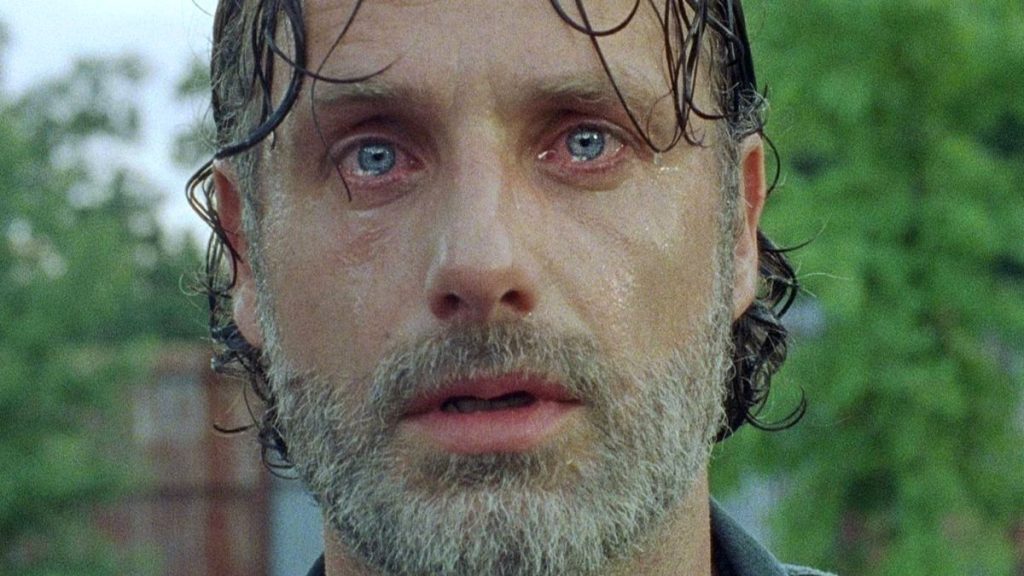
What I am describing in these analyses is a phenomenon called the Simulated Soul. It is the desperate, human desire to find a “ghost in the machine”, to believe that a fictional character has a consistent internal life, when in reality, they’re merely a narrative tool.
Before I dissect the systemic collapse of this illusion in later iterations like Fear the Walking Dead, we must first understand how the creators of The Walking Dead managed to “thread the needle” with Rick Grimes, convincing millions of people to perform a biopsy on a hologram.
🔬 The Two Paths of Narrative Engineering
In the laboratory of storytelling, there are two primary ways to power the engine of a plot.
1. The Character-Driven Engine (The “King” Method)
In this model—mastered by creators like Stephen King—the character is the architect. The writer’s job is to build a “Simulated Person” so thoroughly in their imagination that the character gains a form of internal agency. You drop them into a situation (a haunted hotel, a dome over a city, a localized apocalypse) and you simply watch them react.
- The Golden Rule: The plot is a secondary consequence of the character’s choices. If a character wouldn’t logically do something, it doesn’t happen. The story moves only as fast as the character’s internal consistency allows.
2. The Plot-Driven Engine (The “Walking Dead” Method)
Then we have the opposite. In this model, the Plot is the king, and the characters are merely the high-visibility vests worn by the people moving the furniture.
- The Reality: The writers have a “Destination” (e.g., We need everyone to be at the hilltop by Episode 8). If the characters’ internal logic would keep them safely at home, that logic is treated as a “technical glitch” and bypassed.
The “Simulated Soul” Connection
This is where the Simulated Soul becomes a necessity. In a plot-driven show like The Walking Dead, the writers have to perform a constant magic trick: they have to force the characters to do illogical things to serve the plot, while simultaneously convincing the audience that those actions are the result of a “complex, evolving psychology.”
When it works, we call it “Prestige TV.” When it fails, we get Fear the Walking Dead.
Related Specimen: The Ragdoll Paradox—Why Your Hero is Actually a Liquefied Corpse: Speaking of mangled: While writers use the lazy writing to liquefy a character’s personality, physics uses kinetic energy to do the same to their bones. See my audit on why your favorite action hero should actually be a bag of soup.
The Medium Constraint: Narrative vs. Nuance
I cannot compare a novel to a television show; that is a failure of my standards. A book allows for a ten-page internal monologue where a character’s “soul” is mapped out in prose. Television, however, requires Information Efficiency.
When we look at a TV example like Under the Dome, we see the attempt to maintain character integrity despite the lack of a narrator. The characters’ actions are their thoughts. When they “unpeel the onion,” they do it through behavior, not through “You know, Bob…” dialogue where they explain their trauma to a stranger over a can of beans.
The Walking Dead often fails here. Instead of internal consistency, it uses The Monologue Crutch, characters standing in a field explaining “how they feel now” to justify a total shift in personality that happened off-screen.
Case Study: The Field of Feelings (Rick vs. Shane)
Consider the final confrontation between Rick and Shane. This is a moment of terminal stakes—a literal “him or me” survival scenario. In a character-driven plot, the psychology would be implicit in the action.
Instead, the show pauses the apocalypse for a long-form emotional inventory.
- The Symptom: Rick and Shane engage in a long-ass conversation exploring their feelings and motivations.
- The Diagnosis: This isn’t two men mid-breakdown; it’s the writers’ room ensuring the audience understands the “arc.” It is Narrative Insurance. they’re worried that if the characters don’t explicitly state their “psychology,” the plot point won’t land.
- The Reality: By forcing the characters to be so articulate during a murder-suicide pact, the writers actually break the simulated soul. Real people in that state don’t provide footnotes for their behavior.
The “Narrative Insurance” of the Field: The final confrontation between Rick and Shane in the Season 2 finale is a textbook example of the Monologue Crutch. In a high-stakes survival situation, human psychology is typically expressed through frantic, non-linear action; here, it is replaced by a structured, eighteen-minute emotional inventory. By forcing Rick to provide a verbal syllabus of his own nobility, negotiating fatherhood and leadership potential while staring down a barrel, the writers are essentially taking out “Narrative Insurance.” They don’t trust the characters’ past actions to convey the stakes (and why should they?) so they turn the scene into a series of info-drops that explain the “simulated soul” to the audience in real-time. This isn’t two men at a breaking point; it’s a writers’ room reading their own footnotes aloud to ensure the “arc” lands.
The writing of a show like the Walking Dead is consistent whirlwind of circular logic. They haven’t given the characters a consistent “soul,” so they can’t trust their actions to make sense, which forces them to use the dialogue crutch, which further breaks the character. It’s a self-inflicted wound that bleeds all over the screen.
The Fear Threshold: Systemic Collapse
If The Walking Dead is a masterclass in “threading the needle,” its spin-off, Fear the Walking Dead, is a cautionary tale of what happens when the needle is snapped in half and the thread is set on fire. In this series, the “Simulated Soul” is abandoned entirely in favor of Plot-Driven Animatronics.
The “Status Reset” Syndrome
Unlike the gradual (if clunky) evolution of Rick Grimes, characters in Fear do not have arcs; they have Status Resets. A character might spend an entire season becoming a ruthless pragmatist, only to wake up in the season premiere as a pacifist monk because the new plot requires a “moral center.”
- The Diagnosis: This isn’t a psychological breakdown; it’s a Memory Wipe. The writers are clearing the character’s cache to make room for new, contradictory plot points.
The “Closet Psychopath” Illusion
Fans frequently complained that characters in Fear acted like psychopaths, switching from deep empathy to cold-blooded murder with no transition. From a psychological standpoint, they aren’t psychopaths. A psychopath has a goal. These characters have Narrative Shuffling.
- The Reality: They move because the script says “be in Texas,” and they forgive their enemies because the script says “we need a team-up.” When the gap between action and motivation becomes this wide, the “Simulated Soul” shatters. Even the most forgiving fan realizes they’re watching a puppet show where the strings are made of heavy-duty cable.
The “Jerk Chicken” Method of Characterization
In culinary science, “jerking” involves poking holes in the meat so the marinade can penetrate deep into the tissue. The writers of Fear apply this same violent logic to their cast. They don’t wait for a character to naturally “absorb” a change; they stab holes in the character’s established history and internal logic so they can force the flavor of the new season’s plot into the gaps.
The result isn’t a seasoned soul; it’s a mangled, disjointed anomaly. By the time you’ve “jerked” a character enough to make them fit a 180-degree personality shift, there is more hole than meat. You aren’t watching a human transition; you’re watching a writer desperately trying to make a bland plot “taste” like a character arc by sheer force of trauma.
When fans, the same fans who spent years defending the ‘complex’ psychology of Rick Grimes, start calling out the characters for making zero sense, you know the simulation has failed. The writers of ‘Fear’ stopped trying to thread the needle; they just started trying to murder their characters with it.
The Lab’s Verdict: Respecting the Integrity of the Narrative
This isn’t just about “complaining” that a fictional character isn’t a real person. It is about Narrative Integrity. When creators rely on the “Simulated Soul” to carry a plot-driven show, they’re entering into a contract with their audience. they’re asking us to invest our mental energy into understanding a character’s “mind.”
When shows like Fear the Walking Dead get cavalier and lazy, assuming we will accept their “Jerked Chicken” just because the seasoning is spicy, they’re violating that contract. they’re betting that the audience is too distracted by the noise to notice that the characters behave like they’re, each and every one, bat-shit crazy.
True “Fan Service” isn’t just giving the audience what they want; it’s respecting the audience enough to give them a character who actually exists.