
The Infinite Improbability of Being Trisolaran
Perhaps someone accidentally flipped on Douglas Adams’s Infinite Improbability Drive and, in a sudden burst of cosmic nonsense, a sentient species materialized on a planet orbiting three chaotic suns. It’s the only way to explain how the aliens of The Three-Body Problem managed to bypass the most basic requirement for life: environmental stability.
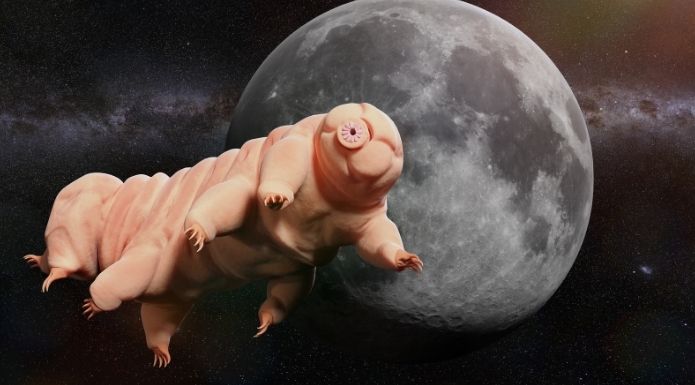
In a recent Medium audit regarding the “Horrible Answer” to the Fermi Paradox, the author, like most fans of the series, gets swept up in the “vastness” of the Dark Forest. they’re so busy looking at the “Forest” (the scary extraterrestrial sociology) that they’ve completely ignored the “Trees” (the impossible biological history).
The assumption is that if the universe is big enough, anything is possible. But “infinite scale” is a narrative sleight of hand. It’s a scientific flourish used to distract you from the fact that Trisolaris should have been a sterile rock four billion years ago.
Examining why the “sexy robot” is a mechanical non-starter. While the Trisolaran Stability Paradox audits the impossible evolution of alien biology, the Q-Angle Quandary investigates the collapse puzzling engineering choice of prioritizing human “attractiveness” over the basic structural requirements of a functioning chassis.
The Adaptation Absurdity: The Evolutionary Catch-22
The Trisolarans are famous for their ability to “dehydrate” to survive the chaotic periods when their world is either a frozen wasteland or a literal hellscape. We are told this is a “brilliant adaptation.”
From a evolutionary standpoint, this is a biological speed-trap.
- The Survival Paradox: To evolve an adaptation for a catastrophe, you first have to survive the catastrophe without the adaptation. In the chaotic three-body system, the first time a planet is scorched to its core or flung into the deep freeze, life doesn’t “mutate a solution” over the next million years. It just ends.
- The Window of Opportunity: Evolution is a slow, iterative luxury. Earth required a multi-billion-year “lucky streak” of relative stability just to produce complex multicellular life. The Trisolarans supposedly managed this while living in a cosmic pinball machine.
- The Scaling Fraud: We see cryptobiosis in Earth species like tardigrades, but they evolved in stable niches over eons. Scaling this to a sentient, technological race that can “wait out” the apocalypse in a storage shed is botanical magic applied to physics.
The Tardigrade Fallacy: Scaling the Impossible
In the Medium article that sparked this biopsy, we see the classic symptom of the “Trees vs. Forest” problem. We are told the Trisolarans “dehydrate,” and our brains immediately reach for the one fact we remember from a 3:00 AM Wikipedia rabbit hole: tardigrades.
But this is a scientific leap of galactic magnitude.
- The Complexity Constraint: A tardigrade is an extremophile that has spent eons perfecting a very specific survival niche. It doesn’t have a centralized brain, a complex circulatory system, or the fragile neural architecture required for sentience. To “roll up” a multi-cellular organism with a technological brain into a dry husk and then “rehydrate” it back into a pilot or a scientist is a biological miracle, not an adaptation.
- The “Roll of the Dice” Evolution: As already discussed, for this dehydration adaptation to be a reality, the Trisolarans would have needed to survive the first thousand Chaotic Eras without this ability while waiting for a random mutation to gift it to them and for the offspring on those individuals to manage to survive and propagate into an entire species.
The Metabolic Jumpstart: The Energy Tax
Even if we accept the “Infinite Improbability” of a sentient species evolving cryptobiosis, Liu Cixin completely ignores the Energy Tax.
- The Restart Catalyst: Rehydration isn’t just about adding water; it’s about restarting a complex, multi-cellular metabolism. To move from a state of zero activity back to “sentience,” an organism needs an immediate, massive input of energy to kickstart cellular respiration, neural firing, and organ function.
- The Dead Battery Paradox: Think of it like a car battery in a deep freeze. You can’t just turn the key; you need a catalyst, a jumpstart from an external source. For a whole civilization to “rehydrate” simultaneously, they would need a secondary, perfectly preserved energy infrastructure ready to feed billions of metabolic “restarts” at once.
- The Entropic Cost: In The Three-Body Problem, rehydration is treated as a free lunch. Just throw the rolled up husks in some water and back to life they come. In reality, every shutdown and restart comes with an entropic cost. Cells don’t just “pause”; they degrade. Without a sentient “maintenance crew” to manage the rehydration process, you wouldn’t get a civilization, you’d get a planet covered in soggy, non-functional biomass.
The “Nuts and Bolts” vs. The Big Idea
I am as fascinated by the novels as anyone. I am also fascinated by the The Trisolarans. However, to maintain that fascination I have to choose to ignore that their existence is ridiculous. They didn’t evolve; they were brought into by a wave of the hand so the “cool” extra-dimensional math could happen.
So, the true irony revealed in The Three-Body Problem is the assumption that deep knowledge in one domain (physics) grants a hall pass in another (evolution). Liu Cixin needed the Trisolarans to exist to facilitate his Dark Forest sociology. Because he needed their psychology, he simply “bullshitted” their biology.
He treats evolution like an engineering problem where you can just install a “dehydration” feature to fix a design flaw. But evolution doesn’t have a lead engineer; it has a billion-year clock and a requirement for stability that a chaotic three-body system simply cannot provide. By the time the reader is dazzled by the Sophons, they’ve already accepted a biological impossibility because “the smart guy said it was so.
The Three-Body Game isn’t just a recruitment tool for the ETO; it’s a narrative cloak that allows the audience to accept biological impossibilities under the guise of ‘digital metaphor’, until the author reveals he was serious, at which point the physics of the story begins to liquefy.
Specimen Update: The “Wild-Assed Guess” Correlation
While the Trisolaran Stability Paradox audits the impossible biological history of the trees, I must also issue a severe methodological warning regarding the “Forest” itself.
A recent external media brief spent over twenty minutes attempting to utilize advanced game theory to dismantle the “Dark Forest Hypothesis.” From the ScreenLab bunker perspective, spending twenty minutes of high-fidelity analysis on why you “don’t buy” a cosmic sociology model that possesses a data set of exactly zero points is structurally identical to spending twenty minutes debating whether Batman could defeat Superman in a localized street fight. It is a highly elaborate, beautifully shored-up wild-assed guess. It treats astrophysics as if there is a team of scientists frantically working at a blackboard to calculate the tactical movements, or lack thereof, of ghosts.
Feeling Dehydrated? Somewhere Among All These Files Is a Glass of Water
- The Q-Angle Quandary: Why Sexy Robots are Engineering Disasters — If you think Trisolaran evolution is a stretch, wait until you see the structural physics of a gynoid’s pelvic tilt.
- The DNA Undo Button: Why Evolution Isn’t a Rewind Feature — More biological “magic” where complex, slow-moving systems are treated like a simple electrical toggle.
- The Sci-Fi Schlock Field Guide: Spectral and the Art of the Scientific Shrug — Examining how “vastness” and technical jargon are used as decoys to hide impossible physics and biology.
- The Hemlock Hustle: Botanical Magic vs. Biological Reality — Exploring the “Pocket-Sized Fact” problem where writers use one cool detail to mask a mountain scientific failures.
- The Anthrax Accelerant: Why Bacteria Doesn’t Work Like Cyanide — Another case of “Biological Impatience” where a storyteller decides that pacing is more important than incubation periods.